



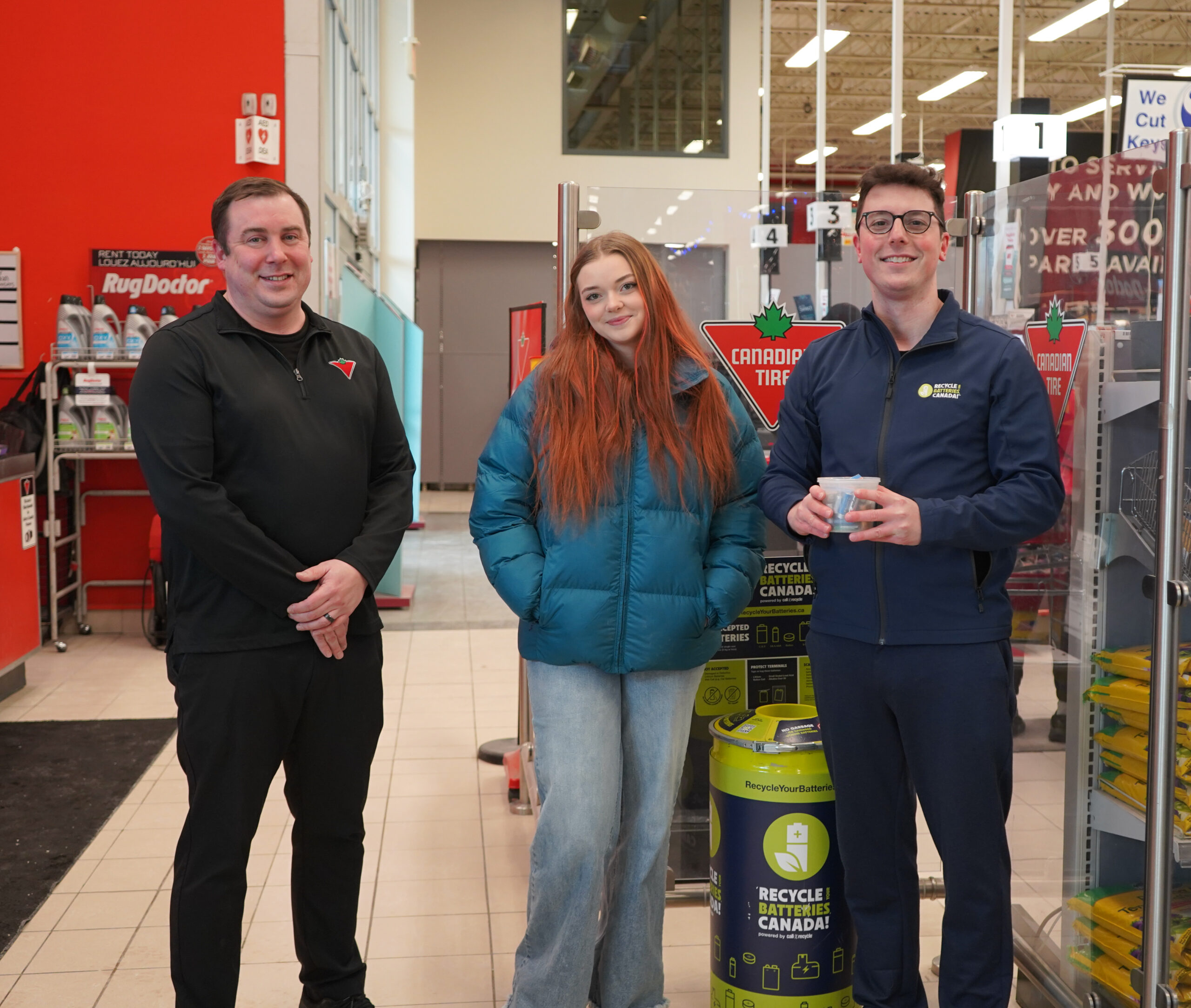
To celebrate International Day of Education, Call2Recycle highlights how education can empower young people to turn learning into meaningful, real-world action. One example of this was Guelph, Ontario, high school student Mya Roberts, who led a battery collection drive through her school’s environmental council, collecting more than 70 pounds of used batteries over the holidays. With the support of trusted partners like Canadian Tire, which provides accessible battery recycling locations across the country, Mya’s efforts demonstrate how youth leadership, environmental education, and reliable recycling infrastructure can come together to drive positive change and support a more sustainable future.
We sat down with Mya for a Q&A to learn more about her journey, what inspired her commitment to sustainability, and the impact of her battery collection efforts.
How long have you been collecting batteries?
“I would say I started around 2016. Since then, batteries have gradually accumulated in my household. I’ve always encouraged people to save their used batteries for a ‘rainy day’ when I organize another collection. So, overall, it’s been close to a decade.”
Where do you usually collect these batteries? Are they mainly household batteries, or do they come from specific places?
“It really depends. I’ve collected many batteries from my school, often brought in by teachers from their homes or by other students. My dad runs a software company, so there are often large laptop batteries from there as well. And of course, there are always smaller household batteries from electronics at home. It’s definitely a wide range.”
How do you store the used batteries before dropping them off? Do you have a specific system?
“For this most recent drive, we had donation boxes at my school, mainly large plastic containers and decorated, labeled cardboard boxes. At home, I use smaller Tupperware-style containers and then consolidate everything into one larger storage area before drop-off.”
What sparked your interest in sustainability and responsible recycling?
“I’ve always been a big animal lover. About ten years ago, my sister and I dreamed of starting a mixed veterinary clinic, where I would focus on marine life and she would focus on land animals. Animals and pets have always been a central part of my life, so protecting them and keeping harmful materials out of landfills has always been important to me.”
How many people are part of the environmental council at your school, and how is it structured?
“We’re organized into several roles. There’s me and a co-president, followed by core council members. We have recycling coordinators, a role I held in Grade 10, who manage the school’s recycling program. There are also wildlife coordinators and members responsible for maintaining the outdoor classroom and keeping the school grounds clean. Then we have general members who assist the main council members. Altogether, there are about 15 to 20 of us.’
What are some ways battery recycling could be made easier for people to participate in?
“I think transportation and accessibility are major barriers. Many people collect batteries but don’t know where to take them, or the drop-off location is too far away or not well advertised. Making recycling locations more accessible and visible would make a big difference.”
For young people who are passionate about sustainability, what advice would you give them?
“I’d say keep going and do your research. When I first joined the environmental council in Grade 10, it wasn’t taken very seriously at my school compared to sports or arts councils. But if it’s something you’re passionate about, stick with it. Keep learning, because opportunities will come, and your work can have an impact beyond just the people immediately around you.”
What advice would you give to kids or teens who want to start something small that could last a long time?
“A lot of people do things because they seem popular or trendy. I think it’s important to choose something you genuinely care about. When you’re passionate, it keeps you motivated, helps you work harder, and makes the project more sustainable and meaningful in the long run.”
Mya’s story is a reminder that education can lead to meaningful environmental action. Through her leadership and commitment, she has shown how small, everyday actions like collecting used batteries can add up to make a real impact. By making battery recycling part of our daily routines and supporting young leaders like Mya, we can all play a role in protecting the environment and building a more sustainable future for our communities.